This guide covers the definition of nonprofit operations management, its four core pillars, key roles, common challenges, and proven best practices for building a more efficient, mission-aligned organization.
TLDR:
- Operations management coordinates systems, people, and processes—enabling sustainable mission delivery
- Four pillars (People, Technology, Processes, Financial Capacity) form operational health
- Only 41% of nonprofits pay all staff a living wage; financial infrastructure gaps limit impact
- Document processes before buying technology
- Fractional expertise offers professional leadership at a fraction of full-time cost
What Is Nonprofit Operations Management?
Nonprofit operations management is the coordination of all systems, people, and processes that allow an organization to pursue its mission consistently and sustainably. It's the distinction between what you do (program delivery) and how you keep doing it (infrastructure). Without strong operations, even the most compelling mission stalls.
Nonprofits operate under constraints that for-profit businesses simply don't face:
- Multiple stakeholders — donors, boards, volunteers, and beneficiaries each bring distinct needs and expectations
- Strict accountability requirements — from IRS Form 990 filings to funder-specific reporting cycles
- Mission-first financial stewardship — balancing impact with sustainability, often against the false pressure of the "overhead myth"
Operations management is a strategic priority, not administrative overhead. Research shows that unclear decision-making authority creates operational drag: 92% of nonprofit managers report that confusion about who decides what increases inefficiency. Executive directors carry unsustainably large workloads because they fail to decentralize power, leaving little bandwidth for the strategic decisions that actually move programs, funding, and people forward.
The Four Pillars of Nonprofit Operations
Nonprofit operations can be grouped into four interconnected pillars: People, Technology, Processes, and Financial Capacity. Weakness in any one pillar strains the others, creating bottlenecks that slow mission delivery.
People
HR, volunteer management, and internal communications all live under the People pillar. Nonprofits depend on human capital more than most sectors—including unpaid labor—which makes people systems foundational to everything else.
Sector-wide data reveals the strain:
- The nonprofit turnover rate is approximately 19%, compared to 12% in other sectors
- 95% of nonprofit leaders are concerned about staff burnout
- Nearly 7 in 10 nonprofit employees reported they would be looking for a new job in 2025
Operational fixes include standardizing repetitive tasks, protecting staff bandwidth through right-sized workloads, and investing in professional development that reduces dependency on individual institutional knowledge.
Technology and Data
IT infrastructure, data management, CRM systems, and facilities make up the Technology pillar. Done right, technology creates a single source of truth for donor data, program outcomes, and financial reporting.
Implementing tools without fixing broken processes first just automates inefficiency. Before investing in a CRM or financial system:
- Map your current processes and document actual workflows
- Identify where handoffs break down or data gets lost
- Define clear requirements before evaluating any vendor
Technology should support strategic thinking, not substitute for it.
Processes and Governance
Program delivery workflows, board governance, legal compliance, and documented procedures all fall under the Processes pillar. When these are written down and consistently followed, the organization stops being dependent on whoever happens to hold institutional knowledge.
Strong processes also protect against compliance risk. Gaps in three areas tend to cause the most damage:
- IRS Form 990 filings: Errors or late submissions trigger scrutiny and erode donor trust
- Employment law compliance: Misclassification and wage issues create liability fast
- Restricted fund management: Misuse of grant funds can terminate funding relationships and jeopardize tax-exempt status
Accurate, timely financial reporting—supported by proper accounting systems—is the foundation of compliance confidence.
Financial Capacity
Financial Capacity determines how much your organization can realistically take on. It covers budgeting, accounting, payroll, cash flow management, grant tracking, and financial reporting. For most nonprofits, this is the most under-resourced pillar—and gaps here directly limit mission delivery.
Consider the financial infrastructure gaps across the sector:
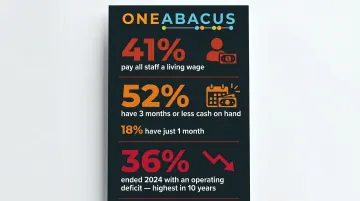
- Only 41% of nonprofits pay all full-time staff a living wage
- 52% have 3 months or less of cash on hand; 18% have 1 month or less
- 36% ended 2024 with an operating deficit—the highest level in 10 years
One response to these gaps is fractional financial leadership. A fractional CFO or COO—like those at One Abacus Advisory—provides senior-level financial oversight at a fraction of full-time cost. Organizations working through a leadership transition, preparing for an audit, or managing rapid growth often get more traction from this model than from hiring into a permanent role they're not yet resourced to support.
Key Roles in Nonprofit Operations Management
Operational responsibilities are distributed across three distinct levels:
- Board of Directors — provides governance and strategic oversight, keeping the organization mission-aligned and financially accountable
- Executive Director or CEO — translates strategy into execution, setting priorities and allocating resources
- Operations Manager or COO — handles day-to-day coordination across finance, HR, IT, and programs
What a Nonprofit Operations Manager Does
A nonprofit Operations Manager oversees administrative staff, manages budgets and financial reporting, supervises HR and technology systems, ensures compliance, and acts as liaison for outsourced service providers. This role requires wide-ranging skills across multiple functions rather than deep specialization in any one area.
Responsibilities include:
- Coordinating finance, HR, IT, and program administration
- Managing budgets, cash flow, and financial reporting
- Ensuring compliance with legal and regulatory requirements
- Overseeing technology systems and data management
- Supporting board governance and strategic planning
The Growing Outsourcing Trend
Outsourcing specialized functions—accounting, HR, IT—is increasingly common among mid-sized nonprofits that can't justify full-time specialist hires. Not-for-profit CFOs face an inability to recruit and retain finance employees because of extraordinarily tight budgets. Outsourcing allows mid-sized nonprofits to access professional-grade support cost-effectively, with an operations manager coordinating external experts rather than managing everything in-house.
The result: expert-level coverage without the fixed costs of full-time salaries — and the flexibility to scale that support as the organization grows or contracts.
Common Operational Challenges — and How to Overcome Them
Resource Constraints and Budget Pressure
Most nonprofits face chronic underfunding of operational infrastructure, driven by the "overhead myth"—the false belief that low overhead equals high effectiveness. The National Council of Nonprofits states that overhead that is too low can be of more concern than overhead that seems high. In 2013, GuideStar, Charity Navigator, and BBB Wise Giving Alliance jointly declared the overhead ratio is "a poor measure of a charity's performance."
Shift your perspective: operations spending is capacity investment. Consider the cost pressures facing the sector:
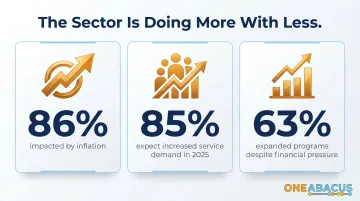
- 86% of nonprofits reported that inflation impacted their operations
- 85% expect demand for services to increase in 2025
- 63% expanded programs in 2024 despite financial pressure
Staff Capacity and Burnout
Understaffed teams running manual, fragmented workflows are particularly vulnerable to burnout. Operational fixes include auditing workflows for redundant administrative tasks, standardizing repetitive processes, and protecting staff bandwidth through appropriately scoped workloads rather than perpetual overtime.
One effective example: Canal Alliance implemented a four-day work week starting February 2024. Results included a 50% reduction in staff turnover, 0 burnout-related resignations, 87% reporting improved work-life balance, and 5,500+ hours of staff time saved—equivalent to nearly 3 full-time positions.
Grant Compliance and Reporting Complexity
Managing multiple funders, each with unique requirements and reporting timelines, creates significant operational burden. Writing a single federal grant application takes an average of 80-200 hours, and 40% of grant seekers spend more than 3 days per grant on research, submission, and reporting alone.
Those numbers add up fast. Nonprofits that invest in structured grant tracking systems, documented workflows, and accurate financial reporting are better positioned to absorb that workload. Only 32% of foundations provide general operating support, which means compliance and administrative costs typically fall on the organization itself.
Data Silos and Technology Fragmentation
Fragmented tools—separate spreadsheets for donor data, program outcomes, and financials—create information silos that slow decision-making and increase error risk. The solution is thoughtful technology selection aligned with clearly defined operational processes, not platform-switching without process redesign.
Before committing to new software, work through these questions:
- What specific problem are we solving?
- Have we documented our current workflow?
- What data do we need to make better decisions?
- Will staff actually use this tool?
Governance and Compliance Risks
Nonprofits carry compliance obligations that span multiple areas of operations. Failures here can jeopardize tax-exempt status and erode donor trust. Key obligations include:
- IRS Form 990 accuracy — errors trigger scrutiny and can signal governance weakness
- Restricted fund management — donor-restricted dollars must be tracked and spent as designated
- Employment law compliance — particularly relevant as teams grow or restructure
- Audit readiness — clean records and documented controls reduce audit risk significantly
Accurate, timely financial reporting, supported by well-configured accounting systems, is what keeps all of these in order.
Best Practices for Stronger Nonprofit Operations
Align Your Budget with Operational Capacity
The operating budget must reflect the true cost of running programs—including technology, training, and administrative infrastructure. Reframe operational expenses as mission-enabling investments rather than costs to minimize. Build in flexibility to reallocate resources as operational needs shift, ensuring you can respond to growth opportunities or unexpected challenges.
Document Processes Before Buying Technology
Technology is only as effective as the processes it supports. Before investing in a CRM, financial system, or project management tool:
- Map your current workflows from end to end
- Identify pain points and bottlenecks
- Define clear requirements for any new tool
- Involve staff who will use the system daily
- Plan for training and adoption support
This prevents expensive software missteps and ensures adoption.
Build Operational Maturity in Stages
Operational improvement follows a lifecycle:
- Early-stage organizations (0–5 years): Prioritize agility and avoid rigid systems. Focus on establishing basic financial controls and program workflows.
- Maturing organizations (5–10 years): Formalize workflows and share institutional knowledge. Document processes to reduce dependency on individual staff.
- Mature organizations (10+ years): Protect core systems while piloting careful innovation. Balance stability with strategic evolution.
The goal at every stage is consistency before efficiency.
Use Data and Financial Reporting to Drive Decisions
Operational effectiveness requires reliable, timely financial data—including budget-to-actual reports, program cost analysis, and cash flow projections. When financial reporting is accurate and accessible to leadership, boards and executives can make proactive decisions instead of reactive ones.
Consider Riders for Health, an NGO managing vehicle maintenance for health ministries in Africa. The organization developed a per-kilometer pricing model ($0.30/km) that covered all vehicle costs. By tracking fleet availability and distance driven as core operational metrics, they directly linked fleet performance to health workers reaching more people with vaccines and prenatal care.
Know When to Bring in Outside Expertise
Even well-run organizations have gaps that internal teams can't easily spot. Engaging external experts—whether a fractional CFO, COO, or operations consultant—brings a neutral, experienced perspective without disrupting service delivery.
For nonprofits navigating growth, leadership transitions, or increasing complexity, a fractional engagement can provide senior-level expertise at significantly lower cost than a full-time hire. One Abacus Advisory, for example, offers right-sized fractional CFO and COO engagements structured around each organization's specific needs—whether that's interim leadership, system optimization, or grant compliance support.
Frequently Asked Questions
What is nonprofit operations management?
Nonprofit operations management is the coordination of systems, people, processes, and financial functions that allow an organization to pursue its mission consistently and sustainably. It distinguishes how you operate from what programs you deliver.
What does a nonprofit operations manager do?
A nonprofit operations manager oversees day-to-day administration, financial reporting, HR, and technology systems. They also ensure legal compliance and coordinate outsourced service providers to keep the organization running smoothly.
What are the main functions of operations management?
Operations management rests on four pillars, each supporting the others:
- People — HR, volunteers, and communications
- Technology — data, IT, and systems
- Processes — program delivery, governance, and compliance
- Financial Capacity — budgeting, accounting, and reporting
What is considered operational support?
Operational support includes the administrative, financial, HR, IT, and compliance functions that enable program staff to do their mission-focused work without friction. This often includes outsourced accounting, HR, or technology services that provide professional-grade expertise cost-effectively.
What is the 33% rule for nonprofits?
The 33% rule is an IRS-defined regulatory requirement stating that at least 33.3% of a 501(c)(3) public charity's total support must come from the general public over a rolling five-year period. Failure to meet this threshold for two consecutive years can result in reclassification from public charity to private foundation.
What is the 80/20 rule for nonprofits?
The 80/20 principle in fundraising suggests that 80% of donations typically come from 20% of donors. Use this to prioritize major-donor cultivation and stewardship while keeping broader engagement strategies in place across your full donor base.