Introduction
Nonprofits running equity initiatives face a paradox: funders are increasingly prioritizing equity in their giving, yet competition for those dollars is fiercer than ever. A well-intentioned mission alone won't win a grant. According to research from Echoing Green and Bridgespan, Black-led organizations receive 76% smaller unrestricted net assets compared to white-led counterparts—a disparity that underscores both the urgency and the complexity of equity funding.
Equity grant writing requires a distinct strategy, not just a repurposed standard proposal. Funders scrutinize whether equity commitments are substantive or performative, whether community voices genuinely shape programs, and whether financial infrastructure can steward investments responsibly.
Surface-level inclusion language won't satisfy sophisticated program officers who expect proof: disaggregated data, diverse leadership, and transparent financials.
That's exactly what this guide addresses. It's written for nonprofit executive directors, development staff, and financial leaders responsible for securing grant funding for equity, diversity, and inclusion programs. We'll cover what equity funders actually want, how to craft a compelling narrative grounded in systemic thinking, how to prepare financial documentation that builds trust, and which common mistakes to avoid.
Key Takeaways
- Equity funders prioritize systemic thinking, community rootedness, and strong financial health over generic program descriptions
- Narrative success requires centering lived experience, using disaggregated data, and mirroring the funder's specific equity framework
- Proposals must include clear budget narratives, credible evaluation plans, and clean financial documents—Form 990s and audited statements
- Research funder giving history through 990 filings and build relationships before applying—cold submissions have significantly lower success rates
- Avoid equity-washing by backing every DEI claim with specific organizational practices and measurable community accountability
What Equity-Focused Funders Are Actually Looking For
Philanthropy has shifted meaningfully over the past decade. Many foundations now prioritize funding organizations that address root causes of systemic inequity rather than simply delivering services to affected populations. Equity-focused funders want proof that structural change is built into how an organization operates—not just what it says.
The Funding Disparity Foundations Are Trying to Correct
Data from Candid and ABFE analyzing 2016-2023 grants reveals that only 50% of Black-led nonprofits received foundation funding in a given year, compared with 70% of other nonprofits. Among small Black-led organizations with budgets under $50,000, only 30% received any grant funding.
The disparity extends to large grants as well: between 2010 and 2014, just 11% of grants over $10 million went to organizations led by people of color.
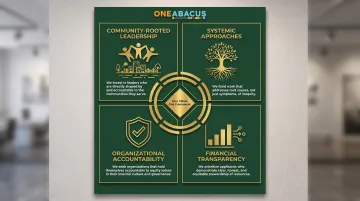
Equity-focused funders are actively working to reverse these patterns. They're seeking:
- Community-rooted leadership: BIPOC-led organizations with deep ties to the populations they serve
- Systemic approaches: Programs targeting root causes, not just symptoms
- Organizational accountability: Evidence that equity shapes governance, hiring, and decision-making
- Financial transparency: Disaggregated demographic data showing who is served, employed, and empowered
Why Disaggregated Data Matters
Funders increasingly require demographic breakdowns by race, gender, geography, and other identity markers. Exponent Philanthropy reports that 90% of lean foundations now collect race/ethnicity data and 68% collect gender data from grantees. This isn't bureaucratic overhead—it's how foundations measure whether resources actually reach marginalized communities and whether disparities are narrowing.
The Shift Toward General Operating Support
Equity funders prefer general operating support and multiyear grants over restricted project funding. Research from the Center for Effective Philanthropy shows that the median proportion of grantees receiving general operating support increased from 23% to 30% after 2020, though multiyear general operating support remains rare at just 12.4% of all grants.
This preference reflects trust-based philanthropy principles: flexible funding signals that funders trust organizations to allocate resources where they're most needed. For grant writers, that means framing proposals around organizational capacity, financial sustainability, and long-term impact rather than isolated program activities.
What These Priorities Mean for Your Proposal
Applicants who frame proposals around mission alignment, community trust, and systemic change consistently outperform those describing discrete programs. The distinction funders draw is between organizations that embed equity into how they function versus those that mention it in narrative language alone.
Practical implications:
- Highlight board diversity, staff composition reflecting communities served, and community advisory roles with decision-making authority
- Reference internal equity audits, strategic plans, or organizational commitments documented through policies
- Connect funding requests to organizational infrastructure that sustains equity work beyond single grant cycles
- Show how the organization's governance and financial practices embody equity values
Funders reviewing dozens of proposals can identify equity language that's grafted onto a proposal versus baked into an organization's operations. Concrete evidence—disaggregated data, governance documents, budget allocations—carries far more weight than well-crafted narrative alone.
Building an Equity-Centered Grant Narrative
Equity grant narratives require fundamentally different framing than traditional proposals. Instead of describing populations as "underserved" or "at-risk," name the systemic forces that created inequity: historical disinvestment, structural racism, discriminatory policies, or economic exclusion. This signals to funders that your organization understands root causes, not just symptoms.
Structuring the Problem Statement Through an Equity Lens
Compare these two approaches:
❌ Generic: "Low-income families lack access to quality childcare."
✅ Equity-centered: "Decades of exclusionary zoning policies and chronic underinvestment in working-class neighborhoods have created childcare deserts where Black and Latinx families wait months for affordable care—perpetuating wealth gaps rooted in systemic racism."
The second version connects present conditions to historical inequity—the kind of analytical depth funders look for.
Centering Lived Experience and Community Voice
Strong problem framing only goes so far. Funders also expect evidence that community members shape program design, not just receive services. Avoid vague claims like "we partner with the community" and instead describe specific mechanisms:
- Community advisory boards with budget authority or veto power over program decisions
- Co-design processes where residents define success metrics and evaluation questions
- Participatory budgeting that allows constituents to allocate funding
- Staff and board composition reflecting the communities served demographically and experientially
The Ford Foundation's theory of change explicitly prioritizes those "most proximate to inequality" and values "legitimacy in communities" over credentials alone. Your narrative should demonstrate this proximity through specific roles and relationships—not general assertions.
The Role of Data in Equity Narratives
Once you've established community voice, back it up with data. Disaggregated statistics strengthen proposals far more than aggregate numbers. Pull from:
- Local needs assessments and census data broken down by race, income, and geography
- Your organization's program data showing who participates and who benefits
- Community health assessments or equity indices documenting disparity patterns
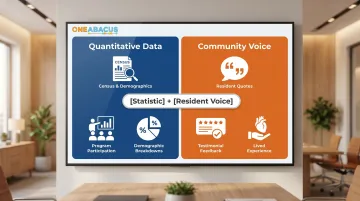
Pair quantitative data with qualitative stories from community members. For example: "In our 2023 program year, 73% of participants were Black women with household incomes below $35,000." Follow that with a resident's voice—someone describing the specific barriers your data reflects, in their own words. Numbers establish scale; stories make inequity legible to a reviewer.
Aligning Language with Funder Frameworks
Research each funder's equity framework, strategic priorities, and definitions published on their websites. The W.K. Kellogg Foundation's Racial Equity 2030 initiative, for instance, emphasizes "innovative, actionable and scalable solutions" and expects grantees to "center the voices of impacted communities." Use their language where your work genuinely reflects it—map specific program elements to their stated priorities rather than inserting terminology without context.
How to Frame Goals and Outcomes for Equity Grants
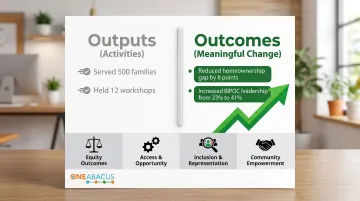
Distinguish between equity outputs and equity outcomes:
Outputs (activities): "Served 500 families" or "Held 12 workshops"
Outcomes (meaningful change): "Reduced the homeownership gap between Black and white families by 8 percentage points" or "Increased BIPOC representation in leadership roles from 23% to 41%"
Equity outcomes should be measurable yet reflect community-level change. Use language like:
- Increased access to resources previously unavailable
- Reduced disparities in specific indicators
- Shifted power dynamics or decision-making authority
- Changed policies that perpetuated inequity
Bridgespan's measurement guidance recommends investigating root causes rather than just measuring behavior, using equity indices to allocate resources, and closing feedback loops by reporting findings to communities who provided data.
Key Components of a Strong Equity Grant Proposal
Every equity grant proposal requires four foundational sections beyond the narrative: organizational background, budget narrative, evaluation plan, and financial documentation. Each must demonstrate that equity is embedded organizationally, not just programmatically.
Organizational Background: Demonstrating Equity Beyond the Mission Statement
For equity grants, this section must go beyond history to demonstrate equity integration across:
Governance and Leadership:
- Board composition by race, gender, and community connection
- Decision-making structures that share power with constituents
- Leadership development pipelines prioritizing BIPOC advancement
Staffing and Culture:
- Staff demographics at all levels, particularly senior management
- Compensation equity analysis showing pay parity
- Professional development investments in BIPOC staff retention
Partnerships:
- Long-term relationships with community-based organizations led by and serving marginalized populations
- Resource-sharing agreements that distribute funding to grassroots partners
- Joint governance structures for collaborative initiatives
Reference any internal equity audits, strategic plans, or documented commitments. Be specific: "Our 2023 equity audit revealed that while 68% of frontline staff identified as BIPOC, only 31% of senior management did. We implemented a leadership development program that has since promoted four BIPOC staff to director-level roles."
Budget Narrative: Connecting Every Line Item to Equity Impact
Every line item should connect to equity impact:
❌ Generic: "Salaries: $125,000"
✅ Equity-centered: "Salaries: $125,000 - Competitive wages at 120% of nonprofit sector median support retention of BIPOC staff who bring lived experience and community trust essential to program credibility."
Explain indirect costs as essential infrastructure rather than overhead: "Administrative costs (18%) cover financial systems that enable disaggregated outcome tracking, compliance with funder reporting requirements, and transparent community accountability—organizational capacity that smaller BIPOC-led nonprofits are often denied funding to build."
Be transparent about resource allocation. If you're subgranting to community partners, specify amounts and selection criteria. Demonstrate that funding flows to the communities most affected.
Evaluation Plan: Equity-Centered Measurement
Describe who benefits, whether disparities narrowed, and how community members defined success:
Key elements:
- Disaggregated outcome metrics by race, gender, income, and other relevant demographics
- Baseline disparity data and specific targets for reduction
- Community involvement in defining what success looks like
- Qualitative feedback mechanisms that capture lived experience
- Transparent reporting processes sharing results with participants
The Equitable Evaluation Framework emphasizes that evaluation should advance equity, examine systemic inequities, and engage evaluators who are representative and culturally competent. Your evaluation plan should reflect these principles, not just extract data for funder consumption.
Financial Documentation and Credibility
Equity funders require strong financial documentation demonstrating organizational stability and stewardship capacity. Required documents typically include:
| Document | Purpose | Funder Expectations |
|---|---|---|
| Form 990 | IRS compliance verification; revenue/expense transparency | Recent filing with no major red flags; consistency with proposal budget |
| Audited Financial Statements | Third-party verification of financial health and internal controls | Clean audit opinion; no material weaknesses in controls |
| Current Organizational Budget | Total operational scope and financial capacity | Realistic revenue projections; balanced budget or explained deficit |
| Project Budget with Narrative | Detailed program costs and revenue sources | Line-item justification; clear distinction between secured and pending funds |
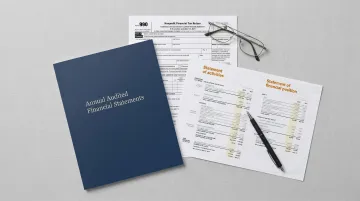
Clean, well-organized financials signal that your organization can steward grant funds responsibly. Research from CEP found that 57% of nonprofits reported being unable to cover essential operating costs in the three years before the pandemic — financial fragility that undermines grant competitiveness.
Nonprofits with strong financial infrastructure have significant competitive advantages. Organizations that partner with fractional CFO firms like One Abacus Advisory can ensure their financial statements, Form 990s, and budget narratives are accurate, internally consistent, and reflect sound controls — addressing one of the most common weak points in competitive grant applications.
Grant Budget Preparation: What Financial Documentation Funders Expect
Inconsistencies between your narrative budget and financial statements are major red flags. Funders cross-reference:
- Form 990 to verify organizational revenue, expenses, and programmatic spending ratios
- Audited financials to confirm assets, liabilities, and fund balances
- Organizational budget to assess whether the grant request fits within broader financial capacity
- Project budget to evaluate cost-effectiveness and resource allocation
Best practices:
- Use the same expense categories across all documents
- Total organizational budget figures should align with audited financial projections — unexplained gaps raise immediate questions
- Explain any significant year-over-year changes in revenue or expenses
- Show realistic fundraising pipeline for pending revenue sources
- Document cost-sharing or matching contributions explicitly
How to Find and Approach Equity-Focused Funders
Effective funder research combines public data analysis with relationship-building. Start by identifying funders whose giving patterns—not just stated priorities—align with your work.
Categories of Equity Funders
- Community foundations with racial equity funds — Local and regional foundations often run dedicated equity initiatives. The San Francisco Foundation's Grantmaking to Advance Racial Equity program and Seattle Foundation's racial justice commitments are strong examples. Most prioritize organizations in their geographic area.
- National foundations with EDI priorities — Ford Foundation, W.K. Kellogg Foundation, and Robert Wood Johnson Foundation carry explicit equity frameworks and large grantmaking budgets. Expect a Letter of Inquiry before a full proposal.
- Government grants — Federal, state, and local funders increasingly attach equity outcomes to their funding criteria. Search Grants.gov for federal opportunities and your state's grant portal for regional funding.
- Corporate foundations — Many have active diversity and inclusion initiatives. Reviewing their 990-PF filings reveals actual past grantees and giving patterns in equity-related areas.
Researching Funder Giving History Through 990 Filings
Foundation 990-PF filings are publicly available and list every grant a private foundation made during the tax year — including grantee name, amount, and stated purpose. That data tells you far more than a funder's website ever will.
Essential research tools:
| Tool | What It Provides | URL |
|---|---|---|
| Candid | Searchable database of 1.9 million organizations; grant histories | candid.org |
| GuideStar | Nonprofit profiles with 990 lookups and financials | guidestar.org |
| ProPublica Nonprofit Explorer | Free searchable 990 database | projects.propublica.org/nonprofits |
| IRS Tax Exempt Organization Search | Official IRS filing access | irs.gov |
Review 990 filings to verify:
- Whether the funder has actually supported organizations like yours
- Typical grant sizes in your program area
- Whether they fund first-time applicants or prioritize established grantees
- Geographic restrictions or preferences
Building Relationships Before You Apply
CEP's research documents that post-2020 shifts toward relationship-based grantmaking have reduced proposal preparation time by 25% and improved grant success rates. A cold submission simply can't compete with a warm introduction from a current grantee or a prior conversation with a program officer.
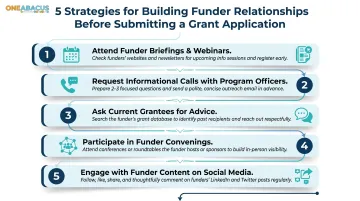
Relationship-building strategies:
- Attend funder briefings, webinars, and office hours
- Request informational calls with program officers before applying
- Ask current grantees about their experience and advice
- Participate in funder convenings or cohort learning opportunities
- Follow funders on social media and engage thoughtfully with their content
When you reach out to a program officer, keep it specific: mention two or three of their recent grants, explain why your work aligns, and ask one clear question. That kind of preparation signals seriousness — and makes it easy for them to say yes to a call.
Funders Simplifying Access for BIPOC-Led Organizations
Some funders are actively removing barriers that historically excluded grassroots and BIPOC-led organizations:
Trust-Based Philanthropy is driving several of these changes. Participating funders have adopted practices like:
- Accepting proposals written for other funders
- Using short Letters of Inquiry before requiring full proposals
- Replacing lengthy applications with conversational calls
- Asking only for information they need and can't obtain elsewhere
Several funders have put this into practice in concrete ways. Borealis Philanthropy supports grassroots movements through authentic relationships and responsive resourcing. The Denver Foundation explicitly prioritizes community-led grantmaking with simplified application processes. And CFLeads has documented 13 community foundations advancing equity through more accessible grantmaking models.
These funders tend to have higher acceptance rates for first-time applicants and provide more support during the application process.
Common Equity Grant Writing Mistakes to Avoid
Even strong organizations undermine their competitiveness through avoidable mistakes. Understanding these pitfalls helps you craft more credible proposals.
The Equity-Washing Problem
Using terms like "equity," "inclusion," and "belonging" without substantive evidence is something experienced funders spot immediately. Research published in Stanford Social Innovation Review criticizes foundations that incorporate "DEI statements" and host "anti-oppression trainings" while funding patterns remain unchanged.
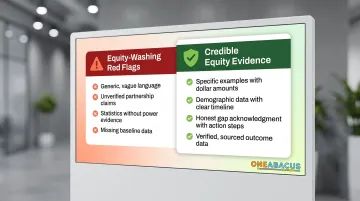
Red flags funders identify:
- Generic equity language not tied to specific organizational practices
- Claims about community partnership without describing decision-making structures
- Diversity statistics without evidence of equitable power distribution
- Equity objectives lacking disaggregated baseline data or measurable targets
How to avoid equity-washing:
- Back every equity claim with concrete examples: "Our community advisory board holds budget approval authority and vetoed our initial program design, leading us to reallocate $45,000 toward direct cash assistance based on their recommendation."
- Provide specific demographic data: "Our board increased from 18% to 64% BIPOC representation between 2021 and 2024 through intentional recruitment from neighborhood associations rather than professional networks."
- Name gaps honestly: "While 82% of our program participants are Latina, only 42% of our staff identify as such. We're addressing this through partnerships with Latinx professional associations and Spanish-language job postings."
Submitting Generic, Untailored Proposals
Equity funders expect proposals that reflect their specific theory of change, geographic priorities, and application format. Sending the same narrative to multiple funders signals that you haven't done the research.
Customization essentials:
- Mirror the funder's equity terminology authentically
- Reference their specific program priorities and strategic initiatives
- Cite their published research or thought leadership
- Explain why your organization aligns with their particular approach to equity
- Follow formatting requirements precisely (page limits, required sections, file formats)
The Financial Documentation Gap
Candid and ABFE data shows that small Black-led nonprofits had grant success rates as low as 23% in 2023—partly because they lack the financial infrastructure larger organizations possess. Many smaller nonprofits lose competitive opportunities for the same reason: incomplete or inconsistent financial documentation.
Common financial weaknesses:
- Form 990 not filed or containing errors
- Missing audit reports or qualified audit opinions
- Budget projections that don't match 990 revenue patterns
- Unexplained fund deficits or cash flow concerns
- Overhead cost percentages appearing misaligned with program descriptions
Before submitting any equity grant application, verify that your Form 990, audit, and internal financial reports are accurate, consistent, and current. Organizations working with fractional CFO services — like those One Abacus Advisory provides — can identify and close these gaps before they cost you a grant award.
Frequently Asked Questions
What makes an equity grant proposal different from a standard nonprofit grant proposal?
Equity proposals go beyond program descriptions—they demonstrate systemic thinking about root causes, authentic community partnerships with shared decision-making, and accountability through disaggregated data. Funders expect equity embedded in governance, staffing, and resource allocation, not just in language.
How do I find funders that specifically support nonprofit equity initiatives?
Start with community foundations' racial equity funds and funder 990-PF filings to identify past equity grantees. Databases like Candid and GrantStation allow filtering by equity keywords, and following equity-focused philanthropy networks surfaces funders who have published explicit racial justice priorities.
What financial documents do equity grant funders typically require?
Most funders require a recent Form 990, audited financial statements, and a project budget with narrative justification. Many equity funders also request board demographic data, organizational equity policies, and governance documents that demonstrate accountability structures.
Can smaller or grassroots nonprofits compete for equity grants?
Yes—many equity funders actively prioritize smaller, community-rooted organizations and have simplified applications to remove barriers. Mission alignment, community trust, and authentic relationships often matter more than organizational size or budget. Look for funders practicing trust-based philanthropy, accepting Letters of Inquiry, or explicitly seeking grassroots applicants.
How should nonprofits measure and report equity outcomes to funders?
Track changes in disparities using disaggregated data by race, gender, and income—not just activity counts. Pair quantitative indicators with community-defined success metrics and qualitative feedback, then report findings transparently to both funders and community members to demonstrate accountability and learning.
What role does an organization's financial health play in winning equity grants?
Financial credibility through clean audits, accurate Form 990s, and sound budgeting signals that funders' investments will be stewarded responsibly. Financial disorganization is one of the most common and preventable reasons for rejection. Strong financial infrastructure—including systems for disaggregated data tracking, transparent reporting, and compliance—provides significant competitive advantage in equity grantmaking.
Securing equity grants takes substantive organizational transformation, rigorous financial accountability, and authentic community relationships. Demonstrating equity through governance, data, and resource allocation—rather than language alone—builds funder trust and positions your nonprofit for the flexible, multiyear support that sustains meaningful change.
Organizations seeking to strengthen their financial infrastructure for grant competitiveness can benefit from fractional CFO services that ensure financial statements, Form 990 preparation, and budget narratives meet funder expectations. One Abacus Advisory specializes in helping nonprofits build the financial credibility and reporting systems that distinguish competitive equity proposals—so mission-driven organizations can focus on the work their communities depend on.