Introduction
Nonprofit leaders face relentless financial pressure: limited budgets, increasing demand for services, and unstable funding sources make it nearly impossible to plan confidently, retain staff, or sustain programs year over year. In 2024, 52% of nonprofits had three months or less of cash on hand, and 36% closed the year with an operating deficit—the highest rate in a decade.
Most nonprofit leaders know grants exist. Yet the deeper strategic value of grant writing—beyond the check itself—is often underestimated. Used well, grant writing functions as financial infrastructure: it disciplines budgeting, sharpens program goals, and builds credibility with funders, boards, and the community alike.
This article breaks down five concrete, operational reasons why grant writing is critical for nonprofits of all sizes—with a focus on real outcomes: financial stability, organizational discipline, and long-term mission delivery.
Key Takeaways
- Grant writing is one of the most reliable paths to significant, non-repayable funding for nonprofits.
- The process strengthens internal operations — it demands tighter financial planning and cleaner documentation.
- Writing a strong proposal forces nonprofits to clarify long-term goals before funders ever ask.
- A polished proposal builds credibility with funders, boards, and stakeholders at the same time.
- Neglecting grant writing leaves nonprofits exposed to funding gaps, operational instability, and stunted program expansion.
What Is Grant Writing for Nonprofits?
Grant writing is the process of researching, preparing, and submitting formal funding proposals to government agencies, private foundations, or corporate programs—with the goal of securing non-repayable financial support. Candid describes it as using "powers of persuasion" to demonstrate that your approach aligns with a funder's interests, resulting in funding that advances mission-driven work.
The process covers more ground than most nonprofit leaders expect:
- Identifying eligible funding opportunities that match your mission
- Aligning your proposal to funder priorities and guidelines
- Building detailed program budgets and financial narratives
- Meeting compliance requirements (audit readiness, IRS documentation, reporting standards)
- Managing post-award reporting and grant compliance
Grant writing functions as a financial strategy tool, not just a development activity. Unlike individual donations or event revenue, which fluctuate year to year, grants offer structured, repeatable funding. That consistency makes grant writing central to a nonprofit's long-term financial health.
Most funders expect proposals to include:
- Executive summary and organizational background
- Need statement (one page or less)
- Project description with activities and timelines
- S.M.A.R.T. goals (Specific, Measurable, Attainable, Relevant, Timebound)
- Detailed project budget
- List of other revenue sources
- Sustainability plan explaining how the project will continue after the grant ends
Stanford Social Innovation Review characterizes grant writing as essential infrastructure: the bridge between vision and resources. Like roads or broadband, it requires deliberate investment and long-term planning to function well.
5 Key Reasons Grant Writing Is Important for Nonprofits
Reason 1: It Provides Stable, Significant Funding
Grants represent one of the largest and most reliable sources of revenue available to nonprofits. Unlike individual donations, events, or membership fees, which tend to fluctuate year to year, grants offer both scale and consistency.
The numbers tell the story:
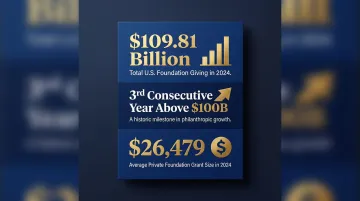
- Foundation giving totaled $109.81 billion in 2024, representing approximately 18.5% of total U.S. charitable giving
- Foundation grantmaking has surpassed the $100 billion mark for three consecutive years as of 2024
- The average grant size from private foundations was $26,479 in 2024, up from $26,140 in 2023
****What makes grants predictable:
Unlike other revenue sources, grant funding is often structured around multi-year commitments or renewable cycles. This gives nonprofits a level of budget predictability that individual donations and events rarely provide. Two-thirds (67%) of surveyed foundations awarded at least one multiyear grant in fiscal year 2022, including 15% that awarded more than 50 multiyear grants.
Versatility of grant funding:
Grants can fund:
- Specific program areas with defined deliverables
- General operating support (GOS): 40.3% of 2024 foundation grants were designated for GOS, up from 37.1% in 2023
- Capital campaigns and facility improvements
- Capacity-building initiatives (staff training, system upgrades, strategic planning)
- Organizational infrastructure and financial systems
****Organizations that benefit most:
- Nonprofits in early stages building their first sustainable budget
- Teams scaling a proven program to new communities or populations
- Organizations facing a revenue gap after losing a major donor
- Nonprofits navigating leadership transitions or significant growth phases
Reason 2: It Strengthens Financial Planning and Internal Organizational Discipline
Grant applications don't just ask for a mission statement. They require detailed program budgets, projected outcomes, a staffing plan, and often audited financial statements. This forces nonprofits to get their financial house in order before they can even apply.
How the grant writing process improves financial management:
Leadership must clearly define:
- How funds will be allocated across personnel, operations, and program activities
- What results are expected per dollar spent
- How the funding fits into the broader organizational budget
- What sustainability plan exists beyond the grant period
****Financial documentation funders require:
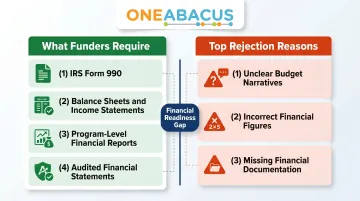
Funders typically require:
- IRS Form 990s (public disclosure of financial activity)
- Balance sheets and income statements
- Program-level financial reports
- Audited or reviewed financial statements
The majority of U.S. states require audited financial statements for nonprofits above certain revenue thresholds. California requires audits for nonprofits with $2M+ in gross revenue; New York and Massachusetts set the bar at $1M+; Florida and Georgia at $1M+ in contributions.
Nonprofits that maintain clean, accurate books and strong financial reporting are significantly better positioned to win grantsand to sustain funder relationships after an award. Budget inaccuracies— unclear budgets, incorrect figures, missing financial narratives — among the top reasons grant proposals are rejected.
A compounding benefit:
Every grant application cycle strengthens financial documentation practices, which makes future proposals stronger and compliance reporting easier. One Abacus Advisory helps nonprofits build this infrastructure through fractional CFO services, ensuring financial documentation, budget narratives, and compliance reporting are ready for the next grant cycle.
Reason 3: It Supports Long-Term Strategic Goal Setting
Grant proposals require nonprofits to articulate clear, measurable, time-bound objectives for their programs, not broad intentions. This discipline forces leadership to align around specific goals, timelines, and metrics before seeking funding.
****How strategic discipline compounds:
The strategic clarity required in grant writing helps nonprofits:
- Prioritize programs based on impact and feasibility
- Allocate internal resources more effectively
- Avoid scope creep by defining what success looks like upfront
- Create accountability structures for program delivery
Grant writing accesses 25% to 50% or more of operating budgets for many organizations. The process compels organizations to articulate their vision, define measurable outcomes, and align programs with funder priorities. These are core elements of strategic planning, not just grant compliance.
Even rejected proposals create value:
- They reveal gaps in planning or program design
- They identify areas where the program model needs strengthening
- They highlight misalignments between organizational goals and available funding priorities
- They provide feedback loops for refining strategy
The reality of competition:
The average grant proposal success rate is between 10% and 30%, with some highly competitive foundations funding only 1% to 10% of requests. In that environment, the organizations that win are almost always the ones that treated strategic planning as ongoing work — not something assembled in response to a deadline.
Reason 4: It Demonstrates Credibility to Funders, Boards, and the Community
Strategic rigor doesn't just improve proposals — it builds the kind of credibility that follows an organization across every funder relationship. A well-crafted grant proposal signals professional management, mission focus, and accountability to funders, boards, and the communities served.
How credibility compounds:
A consistent track record of winning, managing, and properly reporting on grants builds an organization's reputation in the funding ecosystem, leading to:
- Renewed grants from existing funders (renewal rates typically exceed 50–60%)
- Introductions to new funders through word-of-mouth
- Increased trust from major donors and board members
- Stronger leverage in collaborative partnerships
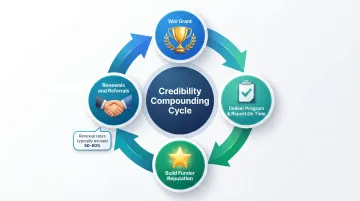
Providing an "impressive, on-time report" for a previous grant is one of the most crucial ways to demonstrate that an organization deserves continued support. Conversely, submitting a new funding request without having met reporting requirements for a previous grant is one of the quickest ways to be declined.
****Where credibility is most decisive:
- Nonprofits in competitive funding environments where reputation differentiates otherwise similar organizations
- Organizations seeking government or federal grants that require rigorous financial documentation
- Nonprofits working to earn board confidence during a period of leadership transition or growth
- Organizations building partnerships with corporate funders who expect professionalism and accountability
The partnership model:
Foundations increasingly view grantees as "partners" rather than simply funding recipients. Strong reporting — covering both wins and setbacks, plus field-level insight — positions the nonprofit as a knowledgeable peer, not just a recipient.
The differentiation factor:
Two equally qualified nonprofits may submit proposals with identical track records and budgets. Letters of support from community leaders, partner organizations, and program beneficiaries can be the deciding factor.
Letters from government officials — police chiefs, school superintendents, city council members — provide official recognition of the nonprofit's role in solving local challenges.
Reason 5: It Expands Stakeholder Relationships and Community Engagement
The grant writing process naturally invites external parties**What letters of support actually do:
Grantmakers frequently require or strongly encourage letters of support, particularly for collaborative projects or community-based initiatives. These letters provide "external validation that transforms your organization's claims from self-promotion into community-backed evidence of impact and necessity."
The differentiation factor:
The letters themselves also deepen relationships. Each request for a letter of support is a touchpoint that reminds partners, officials, and community members why the organization's work matters — creating connections that outlast the grant cycle.
Narrative discipline strengthens public profile:
Grant writing forces nonprofits to articulate their community impact in specific, evidence-backed language. That narrative has value far beyond the proposal itself. It becomes the source material for:
- Donor communications and annual reports
- Marketing and public relations materials
- Board presentations and community forums
- Partnership pitches and collaborative initiatives
What Happens When Grant Writing Is Neglected
When grant writing slips off the priority list, the effects don't stay contained — they ripple across funding, operations, and long-term stability. Here's what that typically looks like:
Overdependence on a Single Funding Source
Relying too heavily on individual donors, one event, or one major funder means a single shift — donor fatigue, economic downturn, a leadership change at the foundation — can destabilize the entire budget. In 2024, 85% of nonprofits expected demand for services to increase, while 84% of those receiving government funding expected cuts. Without diversified grant revenue, there's no buffer.
Weak Financial Infrastructure Goes Unaddressed
Grant writing forces financial discipline — detailed budgets, outcome tracking, compliance documentation. Without it, internal reporting and budgeting practices often stay underdeveloped. That creates downstream problems: harder funder conversations, tougher audits, and eroding board confidence.
A Shrinking Funding Pipeline
The compounding effect is real. Staff miss grant deadlines, funder relationships go uncultivated, and the organization's pipeline quietly shrinks while peer organizations with active grant programs grow. Over 30% of nonprofits fail within the first 10 years, with unsustainable funding consistently cited as a leading cause.
How Nonprofits Can Get the Most from Their Grant Writing
Grant writing delivers the greatest value when it is treated as an ongoing organizational function—not a one-time effort triggered by budget shortfalls. Effective grant programs are built on a few interconnected pillars.
Consistent Research and Pipeline Management
- Maintain an active grants calendar with multiple applications in progress
- Target a mix of new funders and renewals
- Align the calendar with seasonal funder patterns—approximately 40% of foundation grant activity occurs in Q4
Adequate Capacity and Time Investment
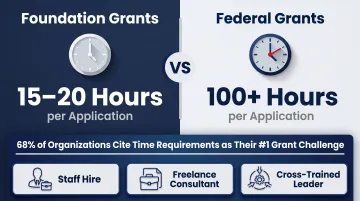
Foundation grants typically require 15-20 hours to complete, while federal grants can require over 100 hours. Given that 68% of organizations identify "time requirements" as their primary grant-seeking challenge, nonprofits should invest in dedicated grant writing capacity—whether through a hired staff member, freelance consultant, or cross-trained team leader.
Strong Financial Infrastructure
The financial infrastructure behind a grant proposal often separates funded organizations from rejected ones. Clean financial statements, well-structured program budgets, and accurate reporting on prior grant use are baseline requirements for most institutional funders.
This is where dedicated financial leadership pays off. A fractional CFO or senior finance advisor—like those at One Abacus Advisory—can ensure financial documentation, budget narratives, and compliance reporting are grant-ready before the next deadline arrives.
Treat Every Cycle as a Feedback Loop
Review what worked, what funders flagged, and how the financial narrative can be tightened for the next cycle. Even rejections provide useful intelligence—about funder priorities, proposal gaps, and where the organizational story needs strengthening.
Frequently Asked Questions
Why is grant writing important for nonprofits?
Grant writing brings in significant, non-repayable funding while strengthening financial planning, goal-setting, and credibility with funders. Done well, it's one of the few revenue strategies that builds organizational capacity at the same time it fills the budget.
Do nonprofits need grant writers?
Most nonprofits benefit from dedicated grant writing capacity—whether through a hired staff member, freelance consultant, or an internal team member trained for the role. The process is time-intensive, technically complex, and directly tied to funding outcomes.
What financial documents do grant funders typically require?
Most grant funders require a standard set of financial documents:
- IRS Form 990
- Audited or reviewed financial statements
- Program-specific budget
- Budget narrative and sustainability plan
- Multi-year projections (for larger or government grants)
How does grant writing support a nonprofit's long-term financial sustainability?
Grants diversify the revenue base, reduce reliance on any single income stream, and—when managed well—create recurring or renewable funding relationships that contribute to multi-year financial stability.
What are the most common reasons nonprofits lose grant opportunities?
Key failure points include misalignment with funder priorities, weak or unclear budget narratives, poor financial documentation, missing compliance requirements, or submitting without a prior relationship with the funder.
How often should a nonprofit apply for grants?
Most experienced nonprofits keep an active grants calendar with several applications in progress at once, balancing new funder outreach with renewals. Frequency should match organizational capacity—not just immediate financial pressure.