Introduction
Grant funding remains one of the most competitive revenue sources for nonprofits — and the stakes are high. Missed deadlines, generic proposals, and weak financial documentation cost organizations critical funding every year. Yet most nonprofits approach grant-seeking reactively, scrambling to meet application deadlines rather than building strategic funder relationships and financial infrastructure that win support consistently.
This guide walks executive directors, development staff, and financial leaders through a complete grant strategy — from prospect research and proposal writing to funder relationships and financial readiness — so grant-seeking becomes intentional and sustainable, not a last-minute scramble.
TLDR:
- Build a proactive grant strategy with a calendar and goals tied to specific programs
- Research funders through Candid and Grants.gov before submitting any application
- Tailor every proposal to funder priorities with clear budgets and measurable outcomes
- Cultivate funder relationships before, during, and after the application cycle
- Ensure financial readiness with clean accounting, audits, and fund-based systems that build funder confidence
Build a Long-Term Grant Strategy, Not Just a Grant List
Most nonprofits chase grants reactively — applying to whatever opportunities appear on their radar without evaluating strategic fit. A proactive strategy identifies funders whose missions align with your work and sets realistic annual goals.
Done well, this approach builds stronger funder relationships and reduces revenue volatility year over year.
No single funding source should represent more than 30% of your total revenue, according to nonprofit financial benchmarks. Grants belong inside a balanced funding model that includes individual donations, earned income, and corporate sponsorships. Among Form 990 filers, the average nonprofit derives 75% from earned income, 15% from private contributions, and 11% from government grants.
Create a Grants Calendar
A grants calendar prevents the chaotic scramble many development teams experience. It should include:
- Application deadlines and submission requirements
- Reporting due dates for active grants
- Funder cultivation touchpoints (site visits, check-in calls, event invitations)
- Board touchpoints for funder introductions
- Internal deadlines for draft reviews and approvals
This visibility helps development staff balance workload, avoid missed deadlines, and maintain consistent communication with funders throughout the year.
Set Measurable, Program-Tied Goals
Tie grant requests to specific programs or initiatives with defined outcomes, not general operating expenses. Funders want to see how their investment produces measurable results. For example, instead of requesting $50,000 for "operations," request $50,000 to serve 200 additional clients through your workforce development program, with outcomes measured by job placement rates.
Key financial health benchmarks to monitor:
- Operating reserves: 3-6 months of expenses
- Program expense ratio: 65-75% of total expenses directed to programs
- Current ratio: Above 1.0 (anything below signals cash flow risk)
These metrics matter beyond internal planning — they're exactly what foundation officers review when evaluating your credibility. A board member who can speak to your organization's financial health carries far more weight than an application alone.
Involve Your Board as Ambassadors
Board members open doors that cold applications cannot.
They validate organizational credibility, provide community connections, and can introduce staff to foundation officers or corporate giving leads. Build this into your grant strategy by identifying which board members have relationships with target funders and creating a cultivation plan that includes board participation.
The 2025 Nonprofit Finance Fund survey found that 36% of nonprofits ended 2024 with operating deficits — the highest in 10 years. Organizations that weathered this had one thing in common: diversified funding built on relationships, not last-minute applications.
How to Find the Right Grant Opportunities for Your Nonprofit
Major Grant Categories
Nonprofits can pursue three main grant types, each with distinct characteristics:
Federal and state government grants:
- Accessed through Grants.gov and SAM.gov
- Require entity registration before applying
- Often larger award amounts but more complex compliance requirements
- Longer application timelines and extensive reporting obligations
Private foundation grants:
- Searchable through Candid's Foundation Directory Online and GrantStation
- Foundation giving grew from $58 billion to $116 billion annually between 2014 and 2022
- More flexible requirements but highly competitive
- 40% of all grant dollars come from just 0.1% of grantmakers (those giving $50 million or more)
Corporate giving programs:
- Often tied to specific geographic areas or cause alignment
- May include in-kind support, employee volunteer programs, or sponsorships
- Require research into corporate social responsibility priorities
Conduct Thorough Prospect Research
Before investing hours in an application, evaluate:
- Does the funder prioritize your issue area and population served?
- Do you fall within their service region?
- Who have they funded before, and at what amounts? Candid tracks approximately 3 million grants totaling more than $180 billion annually — useful for benchmarking award sizes.
- Have funder priorities shifted recently? Review current guidelines, not last year's grants.
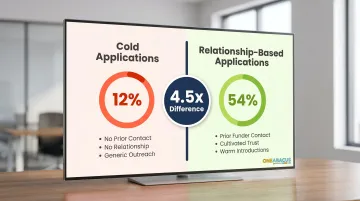
Never apply cold. Reach out to a program officer, attend an informational webinar, or find a warm introduction before submitting. The payoff is significant: research from the Grant Professionals Association found that organizations with existing funder relationships had a 54% award rate — compared to just 12% for cold applications. That's a 4.5x difference built entirely on a relationship.
How to Write a Grant Proposal That Wins Funding
Core Proposal Components
Every compelling grant proposal includes these sections, each tailored to the funder's stated priorities:
Executive summary: Concise overview of the request, organization, and expected impact
Organizational background: Credibility indicators including track record, population served, and capacity
Problem statement: Data-driven description of the need your program addresses, with statistics and context
Goals and objectives: Specific, measurable outcomes tied to the program timeline
Methods and timeline: Clear description of activities, staffing, and milestones
Evaluation plan: How you will measure success and report results to the funder
Budget narrative: Detailed breakdown connecting requested funds to program activities (see next section)
Tailor Every Proposal
Funders recognize generic proposals that have been "shopped around." Customize each application by:
- Opening with a mission alignment statement that connects your work directly to the funder's values
- Citing the funder's own language and priorities from their guidelines
- Referencing their past grantmaking in your field when relevant
- Adjusting your program description to emphasize elements that match their focus areas
Use Persuasive Writing Strategies
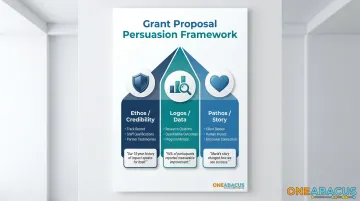
Strong proposals balance three elements:
- Build credibility (ethos) through your track record, staff qualifications, and testimonials from clients or partners
- Support your case with data (logos) — research citations, quantitative outcomes, and metrics from past programs
- Connect emotionally (pathos) with stories that show the human reality behind the need
Concrete examples strengthen all three. Instead of writing "our program helps families," write "last year, our program helped 87 families increase their income by an average of $12,000 through job training and placement services."
Review and Refine
Before submission:
- Get feedback from internal stakeholders and at least one external reviewer who can flag jargon or unclear logic
- Verify that you've followed every funder guideline exactly
- Check that all required attachments are included and properly formatted
- Confirm that your budget totals match across all documents
Common rejection reasons include missed deadlines, guidelines not followed, poor writing quality, and budgets that don't align with the narrative.
Crafting a Budget That Builds Funder Confidence
The budget section is a financial argument in its own right. That alignment check in your review process starts here. Present a clear, line-item budget that:
- Aligns precisely with the program narrative
- Shows how grant funds integrate with other revenue sources
- Demonstrates fiscal responsibility through realistic expense projections
- Includes a sustainability plan for continuing the program after the grant ends
Federal grant budgets have specific requirements. Per Grants.gov, your narrative must itemize component costs, explain why each cost is necessary and reasonable, comply with 2 CFR Part 200, and match totals across all budget documents. Miscalculations exceeding 10% of the total award may require revisions.
One recent regulatory change works in nonprofits' favor: the 2024 revision to the Uniform Guidance increased the de minimis indirect cost rate from 10% to 15% of modified total direct costs, effective October 1, 2024. Federal agencies cannot require a lower rate unless mandated by statute.
Finally, document matching funds and cost-sharing clearly. Funders want to see that other revenue is committed to the program — include in-kind contributions, volunteer hours (valued appropriately), and any other grants supporting the same initiative.
Cultivate Funder Relationships Before and After Applying
Grant funding is built on trust, not just paperwork. The strongest predictor of grant success is relationship quality.
Pre-Application Relationship Building
Invest in cultivation activities before submitting:
- Attend funder information sessions and community events
- Request informational meetings with program officers
- Invite foundation staff to site visits to see your work firsthand
- Follow up after a declined application to ask for feedback and maintain the connection
- Connect funders with board members who share professional or community ties
Research tracked 195 competitive applications over 18 months and found that 88% of applications submitted without any existing relationship were denied, while organizations with relationships achieved a 54% success rate.
Post-Award Stewardship
Once funded, your relationship work continues in a new form:
- Send brief progress updates between formal reports — milestone emails, client success stories, or notes on program adjustments show transparency without adding reporting burden
- Flag timeline or budget changes early; funders respond far better to advance notice than to surprises buried in a final report
- Tie your outcome data directly to the original proposal objectives so funders can see concrete proof their investment delivered results
The Center for Effective Philanthropy found that the two most powerful drivers of strong funder-grantee relationships are the funder's understanding of the grantee's context and transparency from the foundation. Providing context in your communications strengthens both elements.
Why Financial Readiness Is Your Secret Grant Weapon
Why Financial Readiness Determines Who Wins Grants
Before competing for major grants, nonprofits must be "grant-ready" from a financial standpoint. Funders review financial statements, IRS Form 990s, audit reports, and budgets as part of due diligence. Weak or disorganized financials signal risk and can disqualify an otherwise strong proposal.
Essential Financial Infrastructure
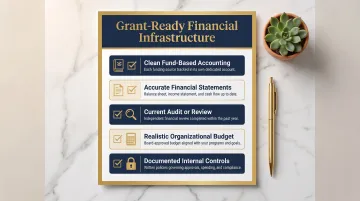
Grant-ready financial systems include:
- Clean, fund-based accounting records that track restricted and unrestricted funds separately
- Accurate, timely financial statements (balance sheet, income statement, cash flow statement)
- Current audit or financial review appropriate to your organization's size and funding sources
- Realistic organizational budget showing how grant funds fit into the whole financial picture
- Documented internal controls that demonstrate fiscal responsibility and reduce fraud risk
State and federal audit requirements vary significantly. The federal single audit threshold increased to $1,000,000 in federal expenditures (up from $750,000) under the 2024 Uniform Guidance revision. State thresholds range from $500,000 in Illinois to $2,000,000 in California, according to the National Council of Nonprofits.
Craft a Compelling Financial Narrative
Inside your proposal, the financial narrative differentiates winning applications:
- Demonstrate organizational sustainability through diversified revenue sources
- Show matching funds or cost-sharing that proves community investment
- Present a credible spend-down plan with realistic timelines
- Explain how you'll maintain the program financially after the grant period ends
Many nonprofits lose grants not because their programs are weak, but because the financial story doesn't hold up. A well-documented budget narrative tells funders exactly what their money will do — and what happens when it's gone.
When to Bring in Financial Leadership
Small-to-mid-size nonprofits often lack dedicated financial leadership yet need sophisticated systems to compete for larger grants. A fractional CFO can help organizations build the financial infrastructure, reporting systems, and budget narratives needed to win funder confidence. One Abacus Advisory, for instance, worked with the Philadelphia Zoo during a leadership transition — optimizing their NetSuite environment and improving month-end close processes. The resulting financial stability gave board members and funders greater confidence in the organization's stewardship capacity.
Post-Award Grant Management and Compliance
Receiving a grant award opens a new set of responsibilities. How you manage compliance, reporting, and fund accounting directly determines whether funders renew — and whether your organization avoids costly clawbacks.
Set Up Grant Tracking Systems
Immediately after receiving an award:
- Create separate fund accounting codes for grant expenditures
- Document every dollar spent in alignment with the approved budget
- Flag any budget modifications that require prior funder approval
- Establish a file system for all grant-related correspondence and documentation
This infrastructure prevents commingling of funds and makes reporting easier.
Understand Grant Types and Revenue Recognition
Different grant structures require different accounting treatment:
- Unconditional grants: Revenue recognized immediately when awarded (depends only on passage of time)
- Conditional grants: Revenue recognized only when performance barriers are substantially met; cash received before then is recorded as a "refundable advance" liability
- Reimbursable grants: Revenue recognized as allowable expenses are incurred and submitted for reimbursement
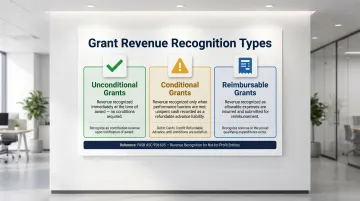
Per FASB ASC 958, a contribution is conditional if it contains both a performance barrier and a right of return (clawback clause). Matching grants are a "classic performance barrier" — you cannot recognize revenue until the match is substantially met.
Prepare for Reporting Deadlines
Mark all required report dates on your grants calendar and work backward:
- Compile financial data and program outcome data at least two weeks before the deadline
- Review reports against original proposal objectives before submission
- Include both quantitative metrics and qualitative stories that illustrate impact
- Submit reports on time — this is one of the strongest predictors of renewal funding
Federal grants require strict compliance. Per 2 CFR 200.339, federal agencies may withhold payments, disallow costs, suspend or terminate awards, or initiate debarment proceedings for non-compliance. The 2024 Uniform Guidance revision raised the micro-purchase threshold to $50,000 and simplified acquisition threshold to $250,000.
Frequently Asked Questions
What are the most effective strategies for securing nonprofit grants?
Align grant pursuits with your mission and financial goals, invest in prospect research before applying, build funder relationships proactively through site visits and program officer contact, and maintain financial readiness with clean books and audit-ready documentation that gives funders confidence in your stewardship.
How do nonprofits find grants that match their mission?
Use platforms like Candid's Foundation Directory, Grants.gov, and GrantStation to filter by focus area, geography, and eligibility. Always review a funder's current priorities, not just their past grantmaking history, before committing time to an application.
What should a nonprofit include in a grant proposal budget?
Include a line-item breakdown tying each expense to program activities, explain how grant funds integrate with other revenue, and add a brief sustainability plan showing how the program continues after the grant period ends.
How important is financial health when applying for grants?
Extremely important. Funders routinely review IRS Form 990s, audited financial statements, and organizational budgets as part of due diligence. Organizations with clean, well-documented financial records and strong internal controls are more competitive than those with disorganized finances or unclear accounting systems.
What happens if a nonprofit doesn't meet grant reporting requirements?
Consequences include delayed payments and loss of future funding eligibility. For federal grants, non-compliance with Uniform Guidance can trigger cost disallowances, award termination, or debarment proceedings — making timely, accurate reporting critical.
Should nonprofits hire a grant writer or manage grant applications in-house?
Both options work depending on capacity and budget. In-house teams offer organizational knowledge and relationship continuity, while external grant writers bring specialized expertise. Base the decision on your annual grant volume, funding complexity, and where you need the most support.